
 By Admin
 AI
The first generation of spatial computing headsets—including Apple Vision Pro and Meta Quest—relied heavily on familiar mobile computing tropes: floating 2D app windows, desktop-style icon grids, and static menus projected into physical rooms. While functional, anchoring flat rectangular screens in 3D space failed to unlock the true potential of spatial perception.
In late 2026, the convergence of on-device neural processing units (NPUs) and generative design frameworks is ushering in 'Generative Spatial UI'. Instead of pre-rendered application templates, mixed reality operating systems now utilize compact foundation models that construct dynamic holographic interfaces on the fly, responding directly to physical architecture and user task context.
Eye-Tracking Intention Prediction and Micro-Gesture Telemetry
High-speed infrared foveated eye-trackers track where the user looks with sub-millimeter precision. By coupling saccadic gaze analysis with generative intent models, the interface anticipates what information is required before the user even reaches out a hand.
For instance, when a user glances at an architectural model on their desk, a floating contextual card containing structural stress data and cost projections materializes at optimal focal distance. If the user shifts focus to an incoming email, the architectural widget smoothly minimizes into a subtle ambient badge in their peripheral vision, preventing cognitive clutter.
- Context-Aware Volumetric Widgets: Interfaces adjust typography, contrast, and depth layering based on room lighting and physical background textures.
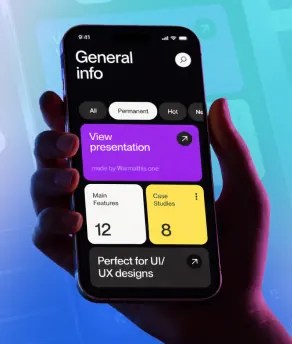
- Cross-Platform Mobile Continuity: Effortlessly beams card-based UI components between smartphone touchscreens and immersive 3D spatial field-of-view.
- Cognitive Load Throttling: Neural models filter low-priority notifications during high-focus tasks, reducing visual distraction and eye strain.
- Micro-Gesture Precision: Millimeter-level finger pinch and hover tracking allows effortless spatial manipulation without requiring bulky handheld controllers.
“In spatial computing, the screen is dead. The future interface is an ambient cloud of contextual intelligence that appears only when you need it and dissolves the instant you turn your attention away.”— Kavita Raman, Principal Interface Architect at Spatial Lab

The Unified Spatial Operating Environment
With Google’s Android XR platform and Apple’s VisionOS 3 adopting open generative UI protocols, developers are transitioning from writing rigid layout files to authoring semantic component manifests. The AI engine decides how best to render the interface—whether as an expansive holographic workbench or a compact smartwatch-style wrist HUD.
This fluid synthesis of artificial intelligence and spatial photonics is transforming mixed reality from an isolating gaming accessory into the primary productivity canvas for designers, engineers, and researchers worldwide.
Spatial Computing & Hardware Editor
Sophia Lin covers cutting-edge artificial intelligence, robotics, multimodal foundation models and edge neural silicon for Technoveda. He analyzes breakthrough technical research and industry deployments to deliver actionable insights for global readers.





 Previous Story
Autonomous Food Service Robotics: Humanoid Kitchen Assistants and Vision-Language-Action Fleets Enter Commercial Dining
 4 Min Read
 Nov 13, 2026


AI Biomechanical Telemetry: Computer Vision and Predictive Kinematics Transform High-Performance Athletic Coaching
4 Min Read
Nov 11, 2026
 Technology
 Business Tech
 Smartphones
 Travel Tech
 Health Tech
 Tech Careers

Comments (2)
Alex Mercer
Nov 14, 2026 at 10:15 AMThe speed at which these AI systems are maturing from basic text completion to verified, grounded multimodal reasoning is astounding. The practical efficiency gains in research and engineering workflows are undeniably real.
Devin Patel
Nov 14, 2026 at 11:42 AMAgreed! The shift toward low-power on-device inference is the real game-changer here. Privacy and latency were always the two major roadblocks holding enterprise and academic adoption back.