
 By Admin
 Products
 5 Min Read
 Nov 12, 2026
For decades, the domestic robotics industry promised automated household helpers, yet consumer reality remained confined to autonomous disc vacuums rolling across living room carpets. The bottleneck was never mobility; it was the extraordinary physical challenge of deformable object manipulation.
Handling crinkled paper shopping bags, cardboard shipping cartons, soft fabrics, and fragile produce requires tactile sensitivity and adaptive motor compliance that rigid industrial robots could never provide. In late 2026, consumer robotics startups and tech titans are finally breaking this barrier with purpose-built domestic sorting assistants.
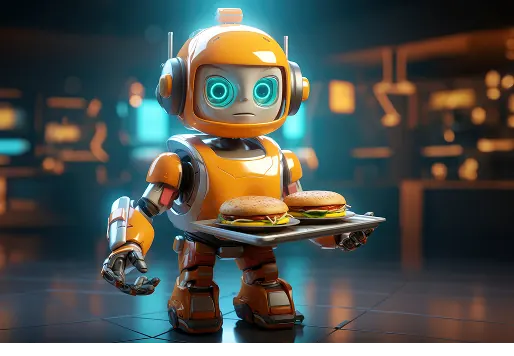
Tactile Array Skins and Vision-Language-Action Models
At the core of modern domestic manipulators are high-density elastomeric tactile sensor arrays embedded in the robot's fingertips and palms. These tactile skins measure shear force, friction slip, and contact pressure distribution at 500 Hz, allowing the robot to feel how securely an object is gripped.
Governed by multi-modal Vision-Language-Action (VLA) foundation models, the robot parses natural language commands like 'Unpack the Trader Joe's groceries and put the chilled items in the fridge.' The perception system identifies package barcodes, reads expiration dates, and routes items to pantry shelves or kitchen drawers with zero dropped items.
- Tactile Slip Detection: Continuous micro-friction sensing prevents crushing delicate berries while maintaining firm grip on heavy bottles.
- Autonomous Barcode & Vision OCR: Reads nutritional labels, expiration dates, and recycling codes to organize pantry inventory.
- Safe Human-Robot Collaboration: Back-drivable planetary gearboxes and capacitive skin stops motion instantly upon gentle human touch.
- Local Edge Inference: All visual perception models run locally on integrated neural silicon, safeguarding family household privacy.
“A robot picking rigid auto parts in a structured factory is 1990s technology. A robot reaching into a paper grocery bag, discerning a soft ripe peach from a heavy glass jar, and putting both away safely is 2026 state of the art.”— Dr. Kenji Takahashi, Chief Manipulation Scientist at RoboLiving

The Evolution of the Automated Household
While early consumer units command premium pricing comparable to high-end home appliances, subscription leasing models and component commoditization are rapidly accelerating mass residential adoption.
By eliminating the repetitive physical drudgery of package sorting, laundry folding, and domestic organization, smart manipulation robotics is transforming the modern home into a truly autonomous living space.
Senior Hardware & Products Editor
Steve Jones is Technoveda’s Senior Hardware & Products Editor. With over a decade of experience testing and benchmarking consumer electronics, smart mobility systems, audiophile gear, and cutting-edge gadgetry, his rigorous laboratory reviews deliver actionable purchasing guidance for tech enthusiasts worldwide.





 Previous Review



 Technology
 Business Tech
 Smartphones
 Travel Tech
 Health Tech
 Tech Careers


Comments (2)
Jordan Blake
Nov 14, 2026 at 11:30 AMFinally a review that delves deep into the hardware engineering and actual battery performance under real-world conditions rather than just reading off the spec sheet. Superb analysis!
Samantha Rivera
Nov 14, 2026 at 12:15 PMAgreed! The comparison testing between dedicated silicon and traditional architecture really highlights how fast consumer hardware is advancing this year.